


Nexus War: Civilization
4.32.70K Reviews
App Specs
- Version
- 0.2.963
- Updated On
- License
- Free
- Downloads
- 10,000,000+
- Developer
- Phantix Games
- Categories
- Strategy
- Platform
- Android, iOS
Screenshots
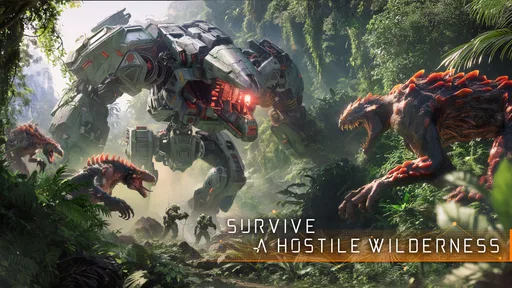
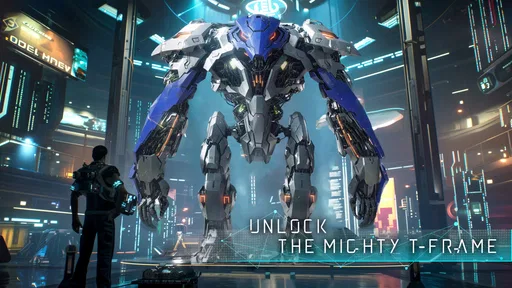
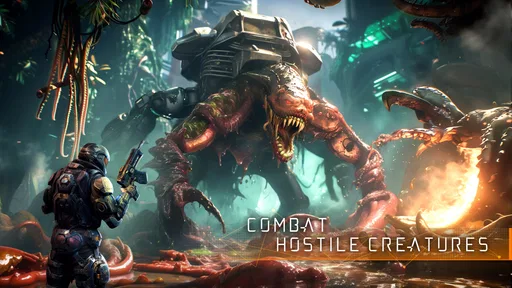

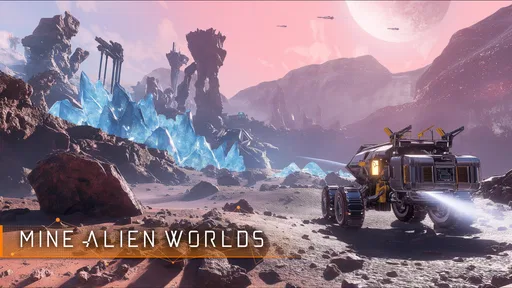

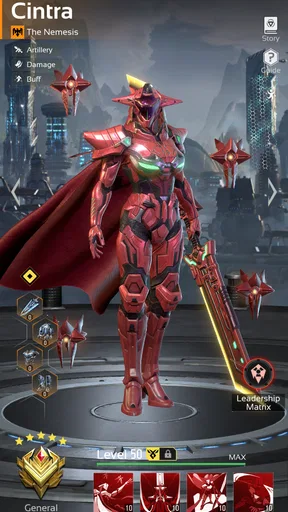
 Analysis by AppCompare
I spent time with Nexus War: Civilization, a science-fiction strategy game from Phantix Games, and my first impression was that it wants to make a huge setting feel manageable through a steady chain of decisions. The premise points toward a galactic conflict, but the appeal is less about simply watching a space battle and more about deciding what deserves attention next. I found myself thinking about expansion, preparation, and timing rather than tapping through a completely passive experience.
That distinction matters because mobile strategy games can easily become either overwhelming spreadsheets or shallow waiting rooms. This one sits between those extremes. It is free to start, rated Teen, and has attracted more than ten million installs with an average score of 4.3 from roughly forty-three thousand ratings. Those figures suggest a broad audience, but they do not automatically make it suitable for everyone. The real question is whether you enjoy gradual progress, repeated planning, and the occasional friction that comes with a strategy game designed for longer sessions over time.
How the early goals shape the first hours
The opening experience works best when I treat it as a learning period rather than a race to become powerful immediately. The early objectives give me a reason to move from one action to another, and that structure is useful because a large-scale science-fiction setting can otherwise feel directionless. Instead of trying to understand every possibility at once, I focus on the next practical improvement and use it to learn how the wider campaign is organized.
My advice for a new player is to avoid spending resources simply because an upgrade is available. Early progress feels smoother when I look at the next few objectives together and choose improvements that support one another. If a task points toward development, I prepare for that task before investing in something unrelated. This small habit reduces the feeling of constantly starting over and makes the early game feel more deliberate.
The first goals also establish the central rhythm: make a choice, wait for its result or complete the required action, then use the new position to reach a stronger objective. I like this rhythm when I am playing in short visits because I can usually identify one useful thing to do before leaving. It is less satisfying if I want a complete strategy match in a single sitting, since the game’s larger ambitions are built around continued progress rather than a clean beginning and ending.
One useful approach is to separate “necessary now” from “interesting later.” New options can be tempting, but not every unlocked possibility deserves immediate attention. I get better results by strengthening the foundation of my current plan before experimenting. That makes the early campaign feel less like a menu tour and more like a sequence of meaningful commitments.
Progress feels clearest when I make a personal checklist
The game does not need to provide a dramatic reward every few minutes for progress to feel visible. I can create my own signals by tracking which objective I am pursuing, what resource or improvement it depends on, and what I want to do after it is complete. This is especially helpful during slower stretches, when the next major change may not arrive immediately.
Worth Reading Before You Choose

Flipboard Shows What News Apps Must Do Beyond the Feed

Switching to Android Auto Means Rethinking Your Driving Routine

Google Calendar Makes a Crowded Week Easier to Manage

Ludo King Makes the Most of the Minutes Between Plans

Baby Panda World Brings Quick Play to Modern Phones, but Its Game Library Feels Busy

ESPN’s Live Game View Makes Following Close Games Easier
I also recommend checking the cost of a decision before confirming it, particularly when several improvements compete for the same pool of resources. A quick pause prevents the common strategy-game mistake of making a satisfying short-term purchase and then discovering that a more important step is now delayed. In my experience, the strongest early habit is not memorizing every system; it is learning to protect flexibility.
That flexibility becomes important because the game’s science-fiction scale can encourage ambitious thinking before the underlying position is ready. I enjoy planning ahead, but I have learned to keep one practical route open. If an objective changes my priorities, I am less frustrated when I have not committed everything to a single attractive idea.
Unlocks, challenge, and the shape of the difficulty curve
The progression is most engaging when a new goal asks me to apply something I have just learned in a slightly different way. That creates a useful sense of escalation without requiring every stage to be dramatically harder. I pay more attention when the game moves from simple completion toward decisions about order, timing, and opportunity cost. Those are the moments when it feels like a strategy game rather than a checklist.
At the same time, the difficulty curve is not perfectly even from a player’s point of view. Some periods feel active because several decisions are available, while others feel slower because progress depends on preparation or waiting. I do not consider that automatically negative; slower pacing can give me time to plan. However, players who expect constant tactical pressure may read those pauses as a lack of momentum.
I found that the best way to handle a difficult stretch is to stop treating every obstacle as a demand to spend immediately. Sometimes the better response is to review the current plan, improve the weakest part of it, and return once the position is more comfortable. This is a more patient style of play, but it prevents frustration and makes success feel earned rather than purchased.
The challenge also depends on how much attention I give to sequencing. Two players can reach the same broad objective while having very different experiences if one wastes resources on attractive side improvements and the other keeps a clear priority. That is one of the game’s stronger strategic lessons. It rewards restraint, although it does not always explain that lesson as directly as I would like.
Where the pacing can test patience
The biggest friction for me is the gap between making a decision and seeing its full benefit. When several steps are connected, one delayed action can make the entire plan feel slower. I have to accept that the game is built around returning to an evolving campaign, not solving everything in one concentrated burst.
For that reason, I would not recommend it to someone who wants fast battles, instant unlocks, or a compact puzzle with a definite finish. A traditional turn-based strategy title may be a better fit for that player because it usually gives clearer control over the length of each session. Nexus War: Civilization is more comfortable for someone who enjoys checking a developing plan, making a few choices, and coming back later to continue the same direction.
My practical solution is to play with a small objective for each visit. I might focus on preparing one upgrade, completing one task, or reviewing what should happen next. This keeps the slower sections from feeling empty and stops me from making rushed decisions simply to create activity.
Retention pressure and the free-to-play trade-off
Because the game is free, its long-term design naturally asks me to consider how much time and money I want to put into continued progress. The available in-app purchases range from $0.99 to $99.99 per item, so the spending scale is wide. I can begin without paying, but I still need to decide what kind of player I want to be before treating purchases as a shortcut through slower sections.
I prefer approaching the game with a personal spending boundary set before I become invested in a particular goal. That is not a criticism unique to this title; it is simply sensible for any free strategy game where progress can become emotionally important. If I am already impatient, a purchase can feel like a solution even when the real issue is that the current pacing does not suit me.
The retention pressure is strongest when a developing campaign gives me a reason to return but also leaves me waiting for the next meaningful step. I like having an ongoing project, yet I do not want the project to become a daily obligation. The healthiest way to play is to return because I have a plan, not because I feel that missing a visit will ruin everything.
This is also where the game may divide players. Those who enjoy long-term progression can see the pauses as breathing room. Those who dislike timers, repeated resource management, or purchase prompts may find the same structure tiring. I would skip it if I know I become frustrated whenever a mobile game slows down my preferred route and then presents spending as the easiest way around that frustration.
Who gets the most from the campaign
I think the best audience is someone who likes science-fiction themes, gradual strategic development, and goals that build on one another. You do not need to be an expert strategist to start, but patience helps. The game gives more back when I think about the next few decisions instead of chasing every available option.
It is also a good match for people who play in fragments. A realistic example is a commute or lunch break: I can open the game, review the current objective, make a couple of decisions, and leave with a clear next step. Later, I return to continue rather than having to remember an entire tactical board from scratch. That makes it more convenient than many traditional strategy games, which often demand a full uninterrupted session.
On the other hand, I would choose a different game if my priority were direct competitive control, fast tactical turns, or a campaign that can be completed in a weekend. This experience is about maintaining a growing plan. It is not the right choice for someone who wants every action to have an immediate, visible payoff.
My verdict on the progression loop
Phantix Games has built a strategy experience around gradual goals, visible development, and a pace that asks the player to return over time. I enjoy the way small choices can support a larger galactic ambition, especially when I resist the temptation to spend resources without a clear reason. The strongest moments come from recognizing that an apparently minor decision has prepared the way for a more important unlock or objective.
The weaker side is the uneven momentum. Some sessions give me plenty to think about, while others are mainly about waiting, preparing, or deciding whether a shortcut is worth considering. That can be relaxing for a patient player, but it can also expose the limits of a free-to-play progression model. I would rather see slower progress as an invitation to plan than as a reason to spend.
The current version is 0.2.963, and the game supports devices running Android 5.0 or later. Those details make it accessible to players using older Android hardware, while the Teen rating is worth keeping in mind for families choosing games together. I would still recommend checking how comfortably your device handles a large strategy interface before committing to long sessions.
Overall, I recommend Nexus War: Civilization to players who want a continuing science-fiction strategy project rather than a quick arcade diversion. Start slowly, keep a clear priority, and decide your spending limit before the campaign becomes demanding. If you enjoy watching a plan develop across repeated visits, the progression has enough structure to keep you interested. If you need rapid action and constant unlocks, its patient pacing will probably feel more like a barrier than a strength.
Sharing a device without sharing the whole campaign
On a household tablet, I would treat this as a game for one clearly identified player rather than a casual pass-around activity. Strategy progress depends on choices made over time, so another person tapping through objectives can spend resources or redirect a plan without understanding why those choices mattered. A simple household rule—ask before opening someone else’s campaign—protects the player’s decisions better than trying to repair an accidental change later.
If several people want to try it, agree on whose turn it is to make strategic decisions and keep the device’s ordinary account boundaries in mind. I would not assume that a shared screen automatically means separate progress or separate purchase preferences. Before letting a younger player use the device, an adult should check the relevant account and purchase settings themselves; the game’s Teen rating is a useful age signal, not a substitute for that conversation.
Choosing a comfortable routine
A useful routine is to end each visit with a short note to yourself: the current priority, the resource you are preserving, and the next action to consider. That is more dependable than asking a family member to remember an unfinished plan, and it helps when play is interrupted by dinner, homework, or a change of device. It also reduces the temptation to make a quick purchase just to get moving again after returning from a break.
Compared with a puzzle game that resets each round, this campaign asks for continuity; compared with a compact tactics game, it offers less of a self-contained session. That trade-off makes it a reasonable shared-device choice only when the household is comfortable with one person’s ongoing project taking priority. If you want a game everyone can pick up, play independently for a few minutes, and put down with no consequences for another player, a turn-based puzzle or match-based strategy game is likely the easier fit.
For the right player, the appeal is not that every visit is exciting, but that small decisions accumulate into a direction they care about. I would try it free, set a modest session routine, and wait to see whether the planning itself is enjoyable before spending anything. In a home where people respect the active player’s choices and understand the Teen age context, it can fit comfortably into spare moments. In a household looking for a completely shared, consequence-free game, I would choose something with shorter independent rounds instead.
Pros
- Large-scale strategy battles with many units and tactical options.
- Strong sci-fi setting with varied factions and futuristic technology.
- City building and resource management add depth beyond combat.
- Regular events and missions provide fresh objectives to pursue.
- Alliance features encourage cooperation and coordinated attacks.
Cons
- Progress can become heavily dependent on timers and resource gathering.
- Competitive players may encounter pressure to make in-app purchases.
- The interface can feel crowded for newcomers to strategy games.
- Long upgrade times may slow progress during later stages.
- Active alliances are often necessary to remain competitive.
FAQs for Nexus War: Civilization
What is Nexus War: Civilization?
Nexus War: Civilization is a mobile strategy game focused on city building, resource management, exploration, and real-time or asynchronous competition with other players. You develop a futuristic settlement, research technologies, train and upgrade units, recruit commanders, and expand across a persistent world map. Its gameplay combines base development, tactical battles, alliances, and long-term progression rather than short, self-contained matches.
Is Nexus War: Civilization free to download and play?
The game can generally be downloaded and played for free, but it includes optional in-app purchases. These purchases may provide premium currency, construction resources, upgrade materials, recruitment opportunities, or progression boosts. You can advance without spending money, although free players may need more patience, careful planning, and regular activity to keep pace with users who invest in faster development or additional resources.
Does Nexus War: Civilization require an internet connection?
Yes, Nexus War: Civilization is designed as an online multiplayer experience and normally requires a stable internet connection. Your city, progress, events, alliance activities, and battles are connected to game servers, so offline play is not the intended experience. A reliable Wi-Fi or mobile-data connection is recommended, especially during competitive events, map exploration, alliance operations, and other activities that update continuously.
What kind of gameplay and strategy does the game offer?
The game mixes several strategy systems, so success is not based only on having powerful units. You must balance construction queues, resource production, technological research, commander development, army composition, and map expansion. Joining an active alliance is also important because cooperation can provide assistance, shared objectives, territorial advantages, and protection. Players who plan upgrades and manage resources efficiently will usually progress more smoothly.
Is Nexus War: Civilization suitable for casual players?
It can be enjoyed casually, particularly during the early stages when missions and guided objectives introduce the main systems. However, the game becomes more demanding as cities grow and competition increases. Timers, recurring events, alliance responsibilities, and world-map activities reward regular logins. Casual players can still make progress, but those seeking to remain highly competitive may need consistent daily involvement and possibly optional spending.


